Learning for the Sake of Learning: What Finland Gets Right … and What My Kids Are Teaching Me ✨
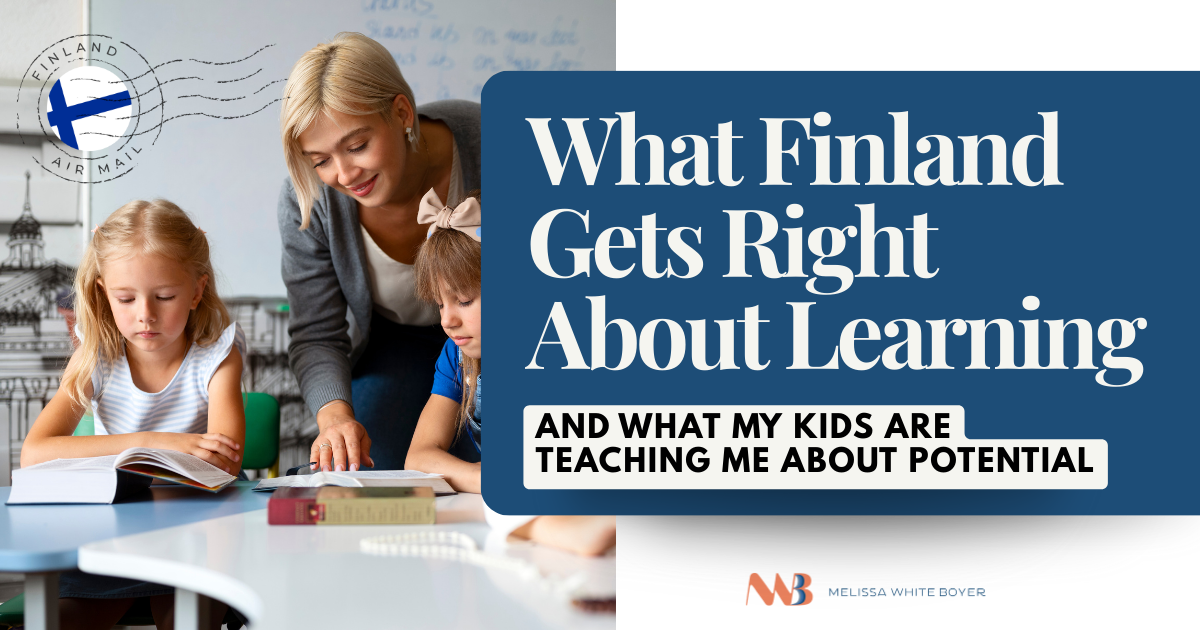
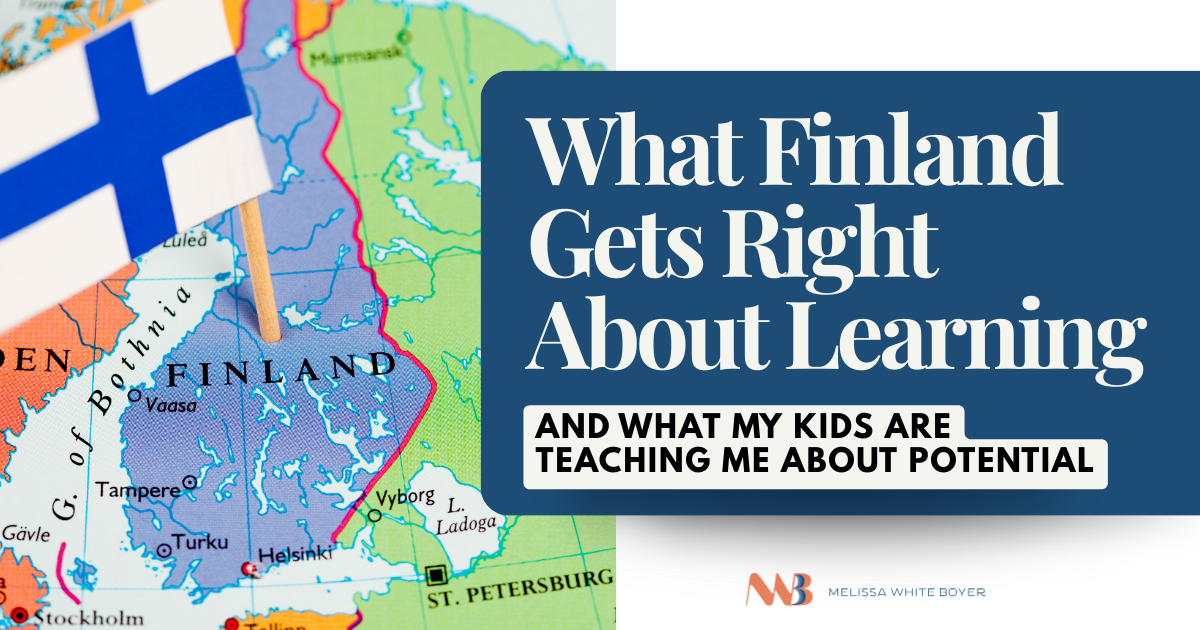
Finland has built one of the most successful education systems in the world — what many call the Finland education model — by doing something that feels almost countercultural in the United States…
This perspective has made me think more deeply about the power of individualized learning and how different approaches can shape a child’s experience.
Removing pressure instead of adding it.
There are no national standardized exams. School days are shorter. Homework is minimal. And yet, Finnish students consistently land near the top on global assessments like the OECD’s PISA rankings.
Many experts attribute this success to Finland’s emphasis on critical thinking, creativity, and deep understanding rather than memorization or test performance. Teachers who must complete master’s level training are trusted to design lessons based on the needs of the children in front of them, not the demands of a national testing calendar.
Research shows Finnish students experience lower stress, stronger problem solving skills, and higher well being than many peers worldwide (Smithsonian Magazine, What We Can Learn from Finland’s Education System).
In other words, Finland believes what many parents instinctively know… kids learn best when they feel safe, rested, supported, and genuinely curious. 🌱
Finland’s approach shows how an individualized education system can help children learn in ways that best fit their needs and temperament.
As a parent, I’m watching two of my children move through very different educational paths… one in a special education setting and one in general education… while my youngest is still a few years away from formal school. Their experiences have made the Finnish model feel even more relevant.
Why an Individualized Education System Matters
Two Kids… Two Systems… Two Realities 👇
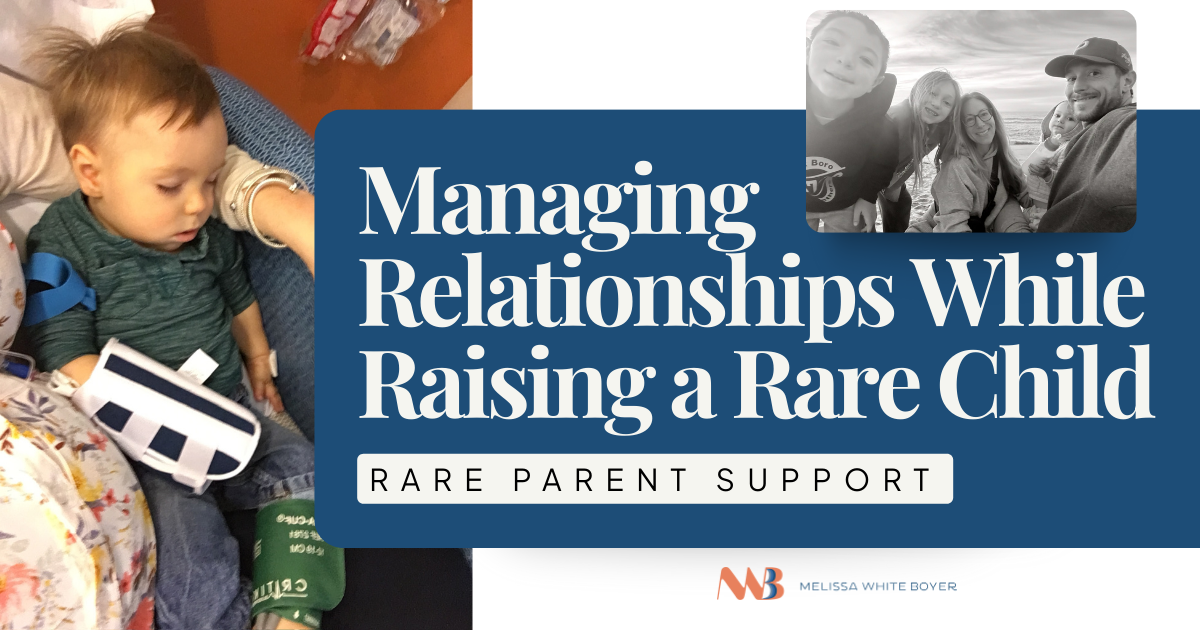
My son, Parker, has a rare genetic disorder and has spent years in a self contained special education classroom. It has been the right place for him… supportive, structured, and individualized. He has always done the very best he can within his abilities and personality. He does not learn at the same pace or in the same way as his typical peers, and comparisons simply don’t apply.
But he does learn.
He does grow.
He does move forward, consistently and meaningfully. 💛
Not because of grades… he doesn’t receive them.
Not because he’s aiming for a score.
But because he approaches learning with a natural enthusiasm.
He learns simply because he loves learning.
This year, he’s mainstreamed for specials, science, and social studies while still receiving support through his IEP. Next year, the plan is for him to join general education for all subjects, with targeted pull outs and services as needed… something we’ll finalize at his upcoming meeting.
And all of this progress has happened without the traditional pressure of test performance.
Meanwhile, My Daughter’s Experience Tells a Different Story 🎒
My daughter moves through the traditional general education system… grades, benchmarks, assessments, and the typical academic pace.
She likes school. She loves the connection, her teachers, and the subjects she naturally gravitates toward. But like many students, her sense of identity has started to form around the letters she sees on a page.
Recently, she began saying, “I’m not good at math.”
But the truth? She is good at math.
She has excellent comprehension.
She understands concepts deeply.
She simply needs to slow down and pay closer attention to detail to avoid the “silly mistakes” that many kids make.
And this wasn’t the result of a failing grade or even a major struggle. It was a B+.
Yet despite our intentional efforts at home to value effort over outcomes, she still internalized that single grade as evidence that she wasn’t “good at math.”
Her belief didn’t come from her ability. It came from a grade. 📉
And I can’t help but ask the question every parent should consider… If a child assigns themselves a limiting identity based on one letter on a test… even a good grade… does that make them more motivated or less?
We already know the answer.
Grades can motivate, yes. But they can also create invisible ceilings kids quietly adopt as truth. Once a child internalizes a belief about their ability, research shows it can significantly impact effort, confidence, and long term performance (Stanford’s Carol Dweck, Growth Mindset studies).
Clarifying Where I Stand as a Parent 💬
Before I go any further, I want to share something clearly. I am not anti school. I’m deeply grateful for the teachers and environments that have supported both of my kids. What I am advocating for is individualized attention… the kind of approach that lets each child learn in the way that works best for them. Finland simply offers an example of what can happen when a system prioritizes that kind of support. Ultimately, I believe in choice… in giving families the space to follow what fits their child’s needs instead of a one size fits all model.
These differences are exactly why an individualized education system offers children more room to thrive without unnecessary pressure.
What Finland… and My Kids… Are Teaching Me 🌍
Pressure doesn’t make kids smarter… curiosity does.
Scores don’t define potential… identity does.
Learning lasts when it’s rooted in interest, not anxiety.
Special education classrooms (when done well) have always understood this. They’re built around individualized plans, small group instruction, flexibility, and growth based evaluation.
Finland brings this model into the general education classroom. And it works.
Meanwhile, our system often treats individualized instruction as something reserved only for the children who “qualify.”
But if all children learn differently, why isn’t differentiation the default, not the exception?
This Is Not About Participation Trophies… It’s About Potential ⭐
I want to be clear about something. I am a competitive person. I am not someone who believes in handing out participation trophies or pretending performance doesn’t matter. Achievement matters. Effort matters. Results matter.
My point isn’t that everyone should receive equal accolades simply for showing up.
My point is that kids perform better when they are taught in ways that bring out their best.
Finland’s results prove this.
When children learn through personalized guidance… when they’re supported instead of stressed, encouraged instead of compared… they tend to reach their maximum potential, not less.
Isn’t that what we truly want during these formative years?
For kids to build confidence, identity, and self awareness in a way that prepares them for adulthood without needing hand holding later?
Personalized learning isn’t about lowering the bar. It’s about raising the potential.
Finding a Middle Ground That Works for All Kids 🧩
We’re not Finland. We’re larger, more diverse, more complex, and more standardized. We can’t simply copy and paste their system onto ours.
But we can borrow the philosophies that clearly work…
- More autonomy for teachers
- More evaluation based on growth, not pressure
- More creativity, inquiry, and movement
- More trust in professional educators
- More identity building and less identity limiting
- More “IEP thinking” in general education
Imagine if every child… not only those with special needs… had a personalized learning plan. Not a legally binding document like an IEP, but a simple structure reflecting:
- how they learn
- what motivates them
- what challenges them
- the pace they thrive at
Imagine if school felt less like a race and more like a journey. 🚶♀️
Imagine if grades were one small piece of the puzzle… not the entire picture.
Imagine if curiosity, creativity, and love of learning mattered just as much as performance.
My Takeaway as a Parent ❤️
Parker learns because he is naturally curious and unburdened by test driven pressure.
My daughter learns, in part, because she is measured… and sometimes overly defined… by grades.
Both are capable. Both are intelligent.
But only one is fully protected from the weight of academic identity.
The more I watch them, the more convinced I am… Learning for the sake of learning will always outlast learning for the sake of a score. 🔥
This isn’t about replacing the system. It’s about reimagining what’s possible within it.
A middle ground exists.
A place where structure and humanity work together.
Where kids are evaluated, yes… but not defined.
Where curiosity is valued, not squeezed out.
Where learning feels inspiring, not exhausting.
Maybe Finland hasn’t discovered a secret formula after all.
Maybe they’ve simply preserved what childhood is meant to be… A season of exploration, joy, curiosity, and possibility… not pressure. 🌈